The discovery of the Laishui Homo sapiens fossil here provides a basis for studying human evolution; The Three Emperors Culture and the Harmony Culture have created the splendid civilization of the Chinese nation The legend of the King of Yan asking for the cauldron, the squirrel demanding the seal, and the exemption from grain production has been widely spread in the Sanpo area. To this day, the folk customs of Sanpo still retain a distinct Ming Dynasty color. The democratic election of the "elderly servant system" to govern everything in Sanpo is known as the "pioneer of democratic elections and the establishment of independent autonomy", which is the earliest prototype of ancient rural democratic elections in China.
The ancient and magical Yesanpo is not only a tourist destination for exploring wonders and wilderness, but also a natural classroom for scientific research and study. It is also a red traditional education base that cherishes the past and present in Myanmar, and an important window for showcasing the image of Laishui to the outside world.
1
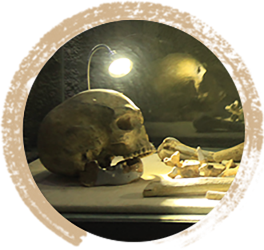
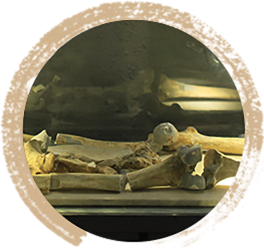
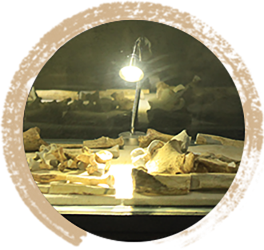
Laishui Homo sapiens Fossil
Laishui Homo sapiens, Tracing back thousands of years of civilization
In 1983, Ren Zhengqing, a villager from Beiqiao, Yesanpo, discovered a fossilized skeleton while digging a vegetable cellar. According to the Archaeology Department of Peking University, this fossil represents an adult male individual, approximately 161 centimeters long and 48 centimeters wide. After being determined by accelerator mass spectrometry at the NSF Accelerator Radioisotope Analysis Laboratory at the University of Arizona in the United States, the age of the fossil was 28000 years ago. The archaeological community named the fossil "Laishui Homo sapiens" based on its excavation site.
2
Leading the way in implementing democratic elections and establishing independent autonomy
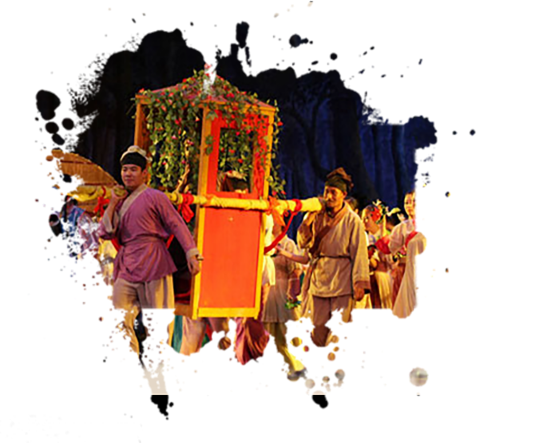
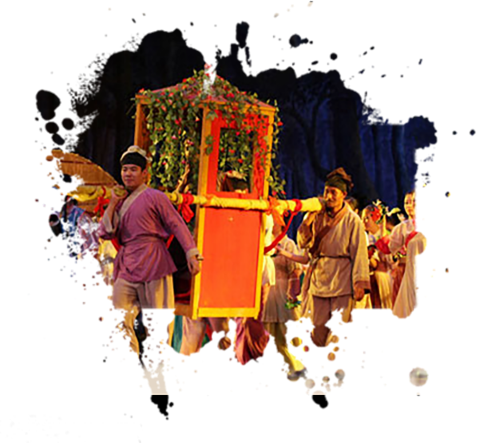
In the Qing Dynasty, due to the reverence of the people of Sanpo for the Ming Dynasty, the Qing court exerted pressure on the people here, prohibiting them from participating in the imperial examination and revoking their right to seek 'fame and fortune'. At this time, some foreign bandits colluded with the government to extort money in Sanpo. The people's lives were not peaceful, so they elected the 'elderly shepherd' who had a strong family background and high expectations to manage all affairs within the slope. They were forced to organize slope protection armed forces to defend the village. Zhi Zai: 'Once the police are heard, regardless of the village boundary, each family will hold a soil gun and wooden stick and gather together to bravely lead the way.' Therefore, 'the decree of Chuzhuzhou County cannot be applied to Sanpo' and 'the people of Sanpo have no obligation except to receive food.
Due to the resistance of feudal forces, the Qing government imposed a "wild" character on the people of Sanpo. From then on, Zhuozhou took charge of Sanpo and implemented the "elderly servant system" within the slope, which has been passed down. The "Zhuozhou Chronicle" refers to the elderly system as "the forefront of democratic elections and the pioneer of independent autonomy." It continued until the 18th year of the Republic of China, when Zhuozhou began to establish a district under its jurisdiction, abolishing the "elderly servant system," and Ye Sanpo was named after it.
3
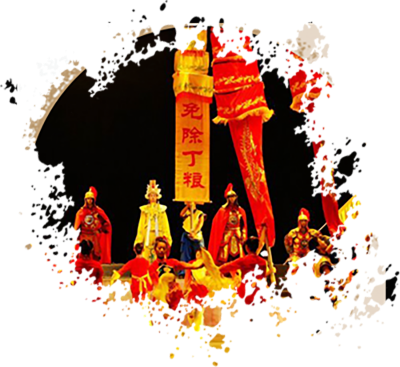
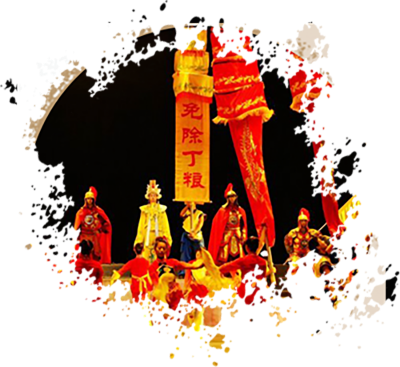
The King of Yan asked for the cauldron, the squirrel demanded the seal, and the Ding grain was exempted
Examining the historical evolution of Yesanpo, there is a folk song that has been passed down: "Yesanpo, Yesanpo, the King of Yan did not sweep the north. He wore a wild sparrow nest tied to his head and his shoes were raised. The Qing Dynasty did not allow him to enter the examination room, and generations of blood and tears were shed
This song is a historical portrayal of Yesanpo. According to the "Zhuozhou Chronicle", "In the early Ming Dynasty, King Yan (Zhu Di) led his army to sweep north to the Sanpo realm (Nucai Ridge) and saw wild beasts (squirrels) eating pine cones in the mountains. Wang Yi thought he would bow his hand and say, “If the beasts submit, how will the people do?” Then an imperial decree was issued to exempt Ding from grain production The saying that this place has been granted an imperial title is still widely circulated today.
Sanhuang Mountain is located in Shenjia'an Village, Yidu Town, Laishui County, with a total area of 9.9 square kilometers. There is a century old persimmon forest here; There is a tomb of Han Shiqi, a first grade and second grade official of the Jiangning Circuit of the Qing Dynasty, as well as a Manchu Han stele written for him by Emperor Kangxi
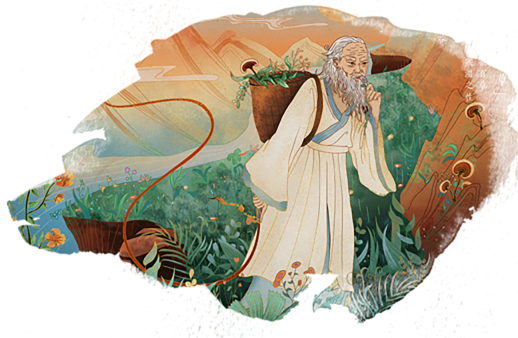
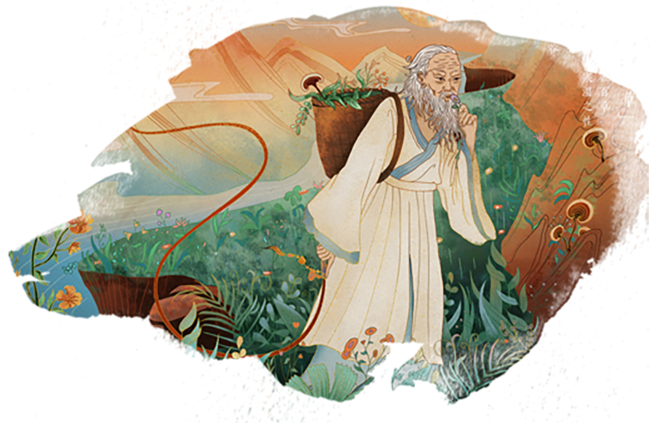
Mount Sanhuang has been revered since ancient times as the 'Sacred Land of the Three Sovereigns,' a holy site dedicated to the ancestors of the Chinese nation: Fuxi (Heavenly Sovereign), Shennong (Earthly Sovereign), and Xuanyuan (Human Sovereign). Here, the ancients built the Sanhuang Temple to enshrine the three primordial sovereigns of 'Heaven, Earth, and Humanity,' praying for the Heavenly Sovereign to bless the land with abundant harvests, and the Human Sovereign to safeguard the well-being of the people. With a history spanning five thousand years, this feng shui treasure is imbued with profound mystique. Visiting Mount Sanhuang to trace one's roots and pay homage to the ancestors offers a glimpse into the historical origins of the Chinese nation. Immersed in the atmosphere of an ancient tribal society, one can experience the simplicity of traditional folk culture, hike through the mountains, play in the waters, and revel in the gifts of nature.




 Copyright©2010-2024 冀ICP备15006914号-1 Hebei Yesanpo Tourism Investment Co., Ltd. Page Copyright